
Products
We are one of the largest producers of biofuels in the country.
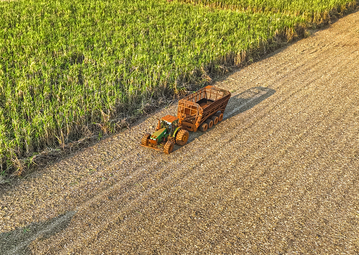
Our eight agro-industrial units have capacity to mill 38 million tons of sugarcane.

We are one of the largest producers of biofuels in the country.
Our eight agro-industrial units have capacity to mill 38 million tons of sugarcane.
What is it?
Ethanol is a renewable biofuel produced from various raw materials, such as sugarcane, which currently accounts for 100% of Atvos' production. It is one of the most sustainable alternatives to fossil fuels, as it reduces greenhouse gas emissions into the atmosphere by up to 90%.
Today, ethanol represents 41% of the Brazilian transport matrix, according to data from the Sugarcane Industry Union (UNICA). Also according to the entity, the use of ethanol in Brazil has already prevented the emission of 660 million tons of CO2 into the atmosphere over the last twenty years.
Anhydrous Ethanol and Hydrated Ethanol: is there a difference?
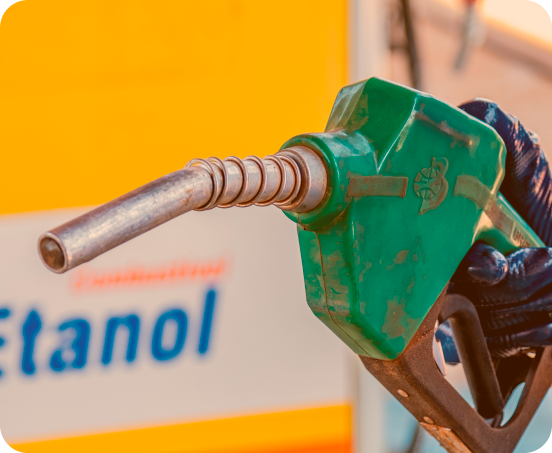
Yes. We produce both anhydrous and hydrated ethanol. The difference between the two types of ethanol lies in the amount of water in their composition. Anhydrous ethanol is practically pure, with at least 99.6% of alcohol content. This is the type that is added to gasoline to improve its octane rating and reduce the emission of polluting gases.
In Brazil, gasoline contains 27.5% ethanol, with a minimum permitted blend of 18%. However, this percentage is expected to increase soon due to the government's incentive for the Fuel of the Future Bill, which seeks to encourage the production and consumption of low-carbon fuels, gradually increasing the blend of ethanol in gasoline, which could reach up to 35%.
Hydrated ethanol, on the other hand, is composed of 95.1% to 96% alcohol, and the remaining percentage is water. It can be used as a biofuel, sold at gas stations across the country, as well as in the production of green polyethylene, in the pharmaceutical and chemical industries, and in the manufacture of cosmetics.

Have you ever stopped to think about where ethanol is present in your daily life? Beyond cars, ethanol can also power motorcycles, buses, trucks, and even ships and airplanes.
But it doesn’t stop there. Ethanol is also a key ingredient in the pharmaceutical industry, cleaning products, and even the cosmetics used daily by millions of people.