
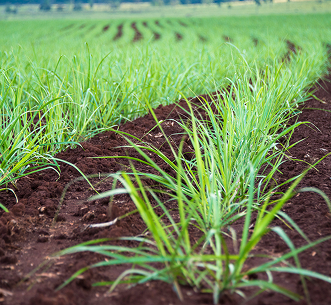
Sustainability
Our commitment is to rethink the way we have always been.
It means improving our future starting now.
We promote a balance between production and the sustainability of our planet.

Our commitment is to rethink the way we have always been.
It means improving our future starting now.
We promote a balance between production and the sustainability of our planet.
Leading the energy transition through bioenergy production is a fundamental strategy for achieving part of the Sustainable Development Goals (SDGs) established by the United Nations (UN). As a signatory to the Global Compact, Atvos is committed to balancing its economic, financial, social, and environmental obligations, aligning its initiatives with this global agenda.
Our ESG (Environmental, Social, and Governance) strategy seeks to generate value for our entire ecosystem and reduce risks to the business and the society. We prioritize the strengthening of human rights, fair labor relations, and environmental conservation, in addition to promoting ethics, compliance, transparency, and socioeconomic development in the regions where we operate.
After careful analysis, Atvos established the most relevant issues for the company from the perspective of its stakeholders and, applying the double materiality methodology, weighed financial and socio-environmental impacts.
Sustainability is part of Atvos' DNA, and we act proactively in relation to climate change with the aim of mitigating risks and, above all, boosting the renewable biofuel market in order to reduce carbon emissions into the atmosphere. We invest in low-carbon technologies and more efficient solutions that reduce greenhouse gas emissions and meet the growing demand for sustainable products.
Through the National Biofuels Policy, RenovaBio, we contribute to promoting a low-carbon economy. All eight of our agro-industrial units are certified to meet the program's requirements.
Click here to learn more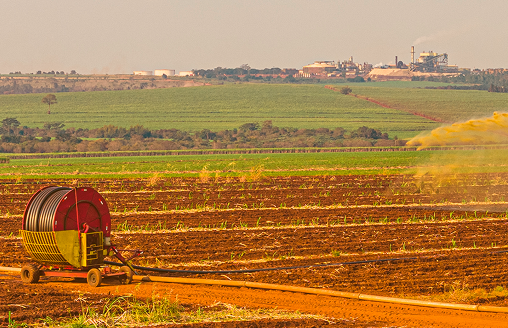
In line with our goal of leading the energy transition, we seek to make our production process as efficient as possible. To this end, we will adopt a strategy for replacing the diesel used in our operations fleet with biomethane produced from waste from our production process.
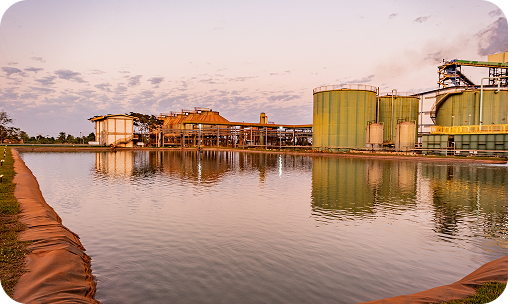
The water sources used in our units are surface and underground. Water is collected in full compliance with the guidelines of competent environmental agencies, based on the volumes of water available. This condition, combined with water treatment and reuse initiatives, contributes to reducing local environmental impacts.
We do not operate in areas with water stress and we do not discharge effluents generated in the production process into watercourses and reservoirs. We have Effluent Treatment Plants (ETPs) to treat these residues before they are incorporated into wastewater and applied to crops, following recommendations of the Vinasse Application Plan (PAV).
We have adopted an internal eco-indicator with established water consumption targets per ton of crushed sugarcane, aiming to minimize consumption using technologies available at each agro-industrial plant. Our units also operate with semi-closed water cooling circuits, such as cooling towers, to generate steam in boilers. In automotive workshops, water is treated and reused for washing equipment.
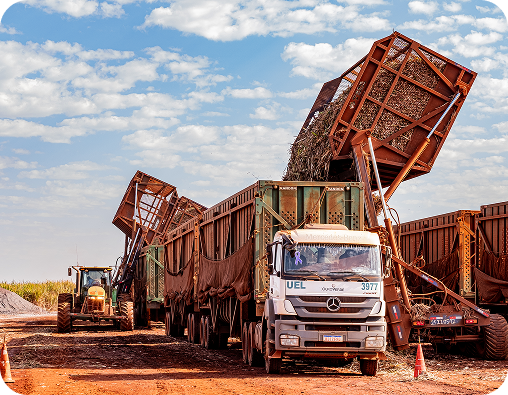
Here at Atvos, we implement the principles of circular economy through the management of recyclable waste and reduction in consumption of chemical fertilizers. We produce co-generated by-products during our production processes, such as filter cake and vinasse, which are used as biofertilizers in sugarcane fields.
As part of the New Business project, the new biomethane plant will significantly increase the production of renewable natural gas. The expectation is to produce, in the coming years, 28 million m³ of biomethane from filter cake and vinasse, ensuring appropriate destination for this waste and generating new revenue for the company.
At Atvos, we have adopted a Solid Waste Management Plan (PGRS) in all our units. This initiative is based on minimizing generation, separation, packaging, identification, collection, temporary storage, transportation, treatment, and final disposal of this waste, carried out by licensed and specialized companies for each type of material.

We manage our operations with a view to maximizing the positive impacts of our agricultural activities, focusing on practices that promote protection of ecosystems and contribute to the preservation of species.
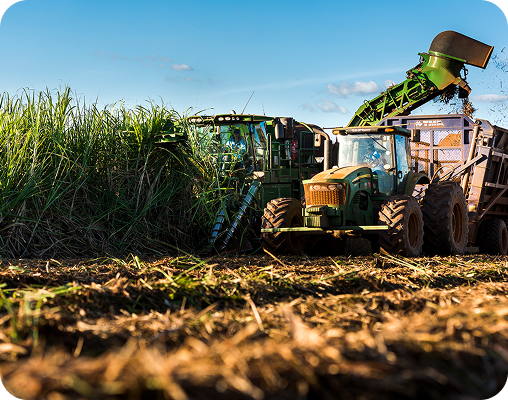
Our harvest is 100% mechanized, and we prohibit the practice of burning in order to prevent fires, protecting natural vegetation and fauna. Among the measures adopted to combat fires in our operations are hourly measurement of the temperature of harvesters with a digital laser thermometer, checking the weather conditions at the workplace, and the presence of water trucks at agro-industrial plants. In addition, all the company's units are part of the Emergency Mutual Aid Plan (PAME), a group formed by companies, governments, and communities to provide integrated emergency assistance in response to fires in the locations where they operate.
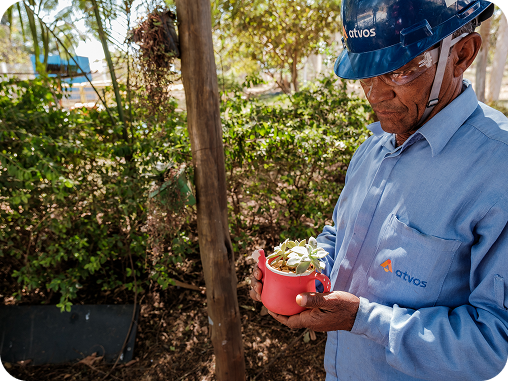
Our sugarcane fields and industrial operations were established in areas previously converted to pasture or agriculture. In addition, we have carried out the recovery of areas through reforestation, enabling the restoration of species and maintenance of biodiversity. We frequently monitor and evaluate the flora and fauna of preservation areas, legal reserves, and water sources in our units in accordance with environmental legislation, in addition to working to raise awareness about preservation of local biodiversity.

We count on a robust chain of stakeholders that requires constant engagement. Therefore, we build long-term relationships based on qualification through legal, fiscal, financial, and technical requirements, and ensure that all partners adhere to the Supplier Code of Ethics and the Contractual Guidelines for Agricultural Partners and Sugarcane Supply, which cover essential topics such as prevention and fight against corruption, respect for human rights, and labor relations. We follow an Integrity Due Diligence Guideline, which establishes a process for analyzing information about individuals and legal entities that allows us to assess risks and ensure ethical business relationships.
We are committed to acting with ethics, integrity, and transparency, as expressed in our Code of Conduct and our Compliance Policy. At Atvos, compliance governance begins with the Board of Directors and extends to all members, with the support of the Compliance Committee. In our processes, we promote transparency, impartiality in judgments, and diversity, ensuring the presence of independent members in the highest governance body.
Atvos also counts on an Ethics Hotline, which operates independently, for reporting suspicions or situations of misconduct in the workplace or by partners, including corruption, bribery, fraud, harassment, and conflicts of interest. All reports received are recorded and investigated by a specialized team with due impartiality and legal support, ensuring confidentiality and protection against any type of retaliation for those who make reports in good faith.
The Ethics Hotline is available by phone at 0800 800 0118, 24 hours a day, or through the website.
All our commitments and initiatives related to the Environmental, Social, and Governance tripod give us credibility as one of the leading producers of clean energy in Brazil and worldwide. Based on these principles, our agro-industrial units comply with rigorous processes to achieve important recognition in the domestic and global markets. Click here to learn more about our role in the National Biofuels Policy, RenovaBio, and learn about other certifications we have earned here.
Diversity and development of local members and communities
We believe in the transformative potential of our operations in the lives of more than 11,000 members, distributed across our eight agro-industrial units and two corporate offices.
Click here to learn moreWe seek to promote a greater level of engagement and belongingness through commitments and initiatives focused on diversity and inclusion, recognition and valorization of its people, as well as contributing to increased employability and economic development in the 23 municipalities where we operate or impact with our activities.
We contribute to the professional qualification of local communities through MOVA (Learning Movement), which offers several free courses to promote employability and socioeconomic development. We also offer community support for local projects and actions. Requests are addressed based on the company's Private Social Investment Guideline.